Camunda Platform
the Camunda process engine
Level 3 BPMN
-
Executable BPMN
-
Visible model remains identical to level 2
-
Adds vendor-specific execution related information to model
Camunda Platform
-
Available in two major versions
-
Camunda Platform 7 (today’s focus)[1]
-
Camunda Platform 8
-
-
Lightweight process engines to add process execution capabilities to your application(s)
The Universal Process Orchestrator
Camunda Platform 7
-
A process and decision management framework
-
Implemented in Java
-
Fulfills the engine roles that OMG BPM standards BPMN and DMN assume
-
Forked from the Activiti project in 2013
-
Made available under the open source Apache Software License (v2)
-
Community + Camunda supported active(ly monitored) forums
-
Enterprise, supported version offered with additional services, features and tools
Philosophy
-
End to End Orchestration
-
Across organisational units and systems
-
Focussed on the outcome of the overall workflow
-
Extracted from business systems
-
-
Standards based business/IT collaboration
-
Developer friendly
-
Non-intrusive
-
Polyglot ready
-
Bring your own tools
-
-
Architecturally flexible
-
Low-code, because No-code doesn’t really work
-
Let’s not get in your way as a developer, but make you efficient!
-
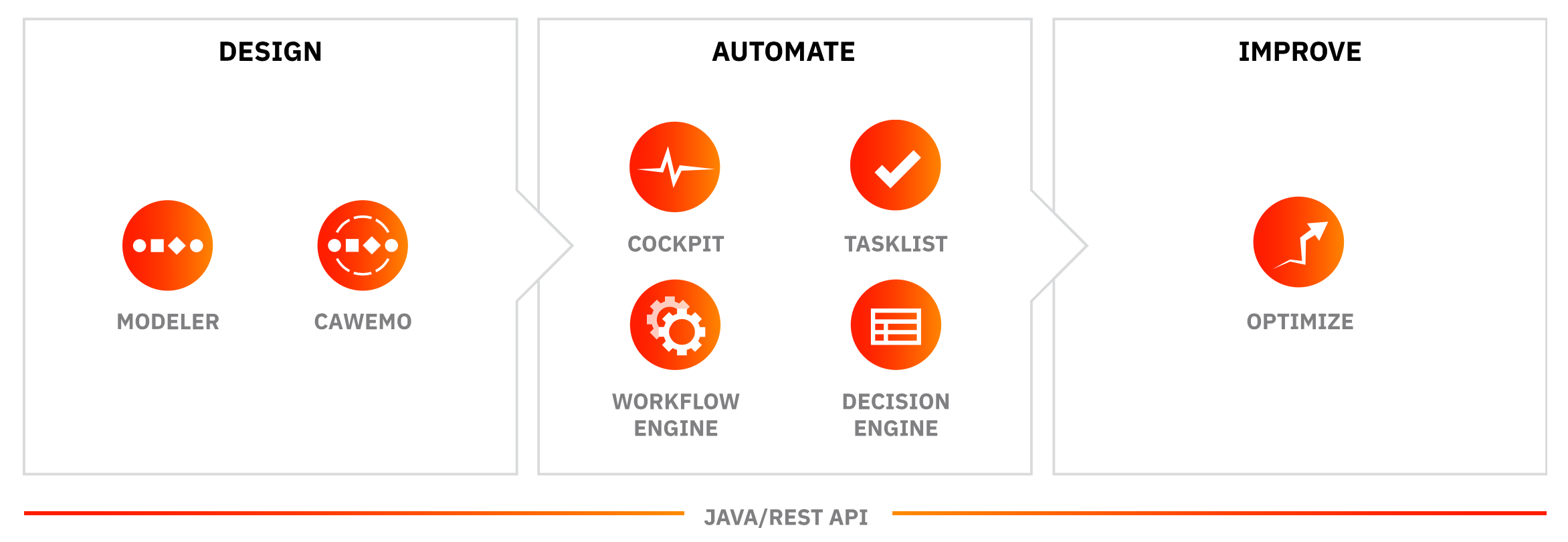
What is Gained from Process Engines like Camunda?
-
Extract process and decision logic from other business logic
-
Including deviations
-
-
Execute and improve what was agreed with the business
-
Captured in process and decision models
-
-
Better collaboration
-
Common language for business and system
-
-
Developer friendly: developers can learn and utilise familiar tools
-
Includes effective test automation
-
-
Consistency, Observability, Auditability, etc…