BPMN Level 2 - Part 3
Large Scope: Errors, Transactions and Event Subprocesses
Error Handling
-
Modelling error scenarios as functional process paths in BPMN
-
Used to express an activity ended in an exception end state
-
Trigger may be technical or business exception
-
Activity did not complete normally
-
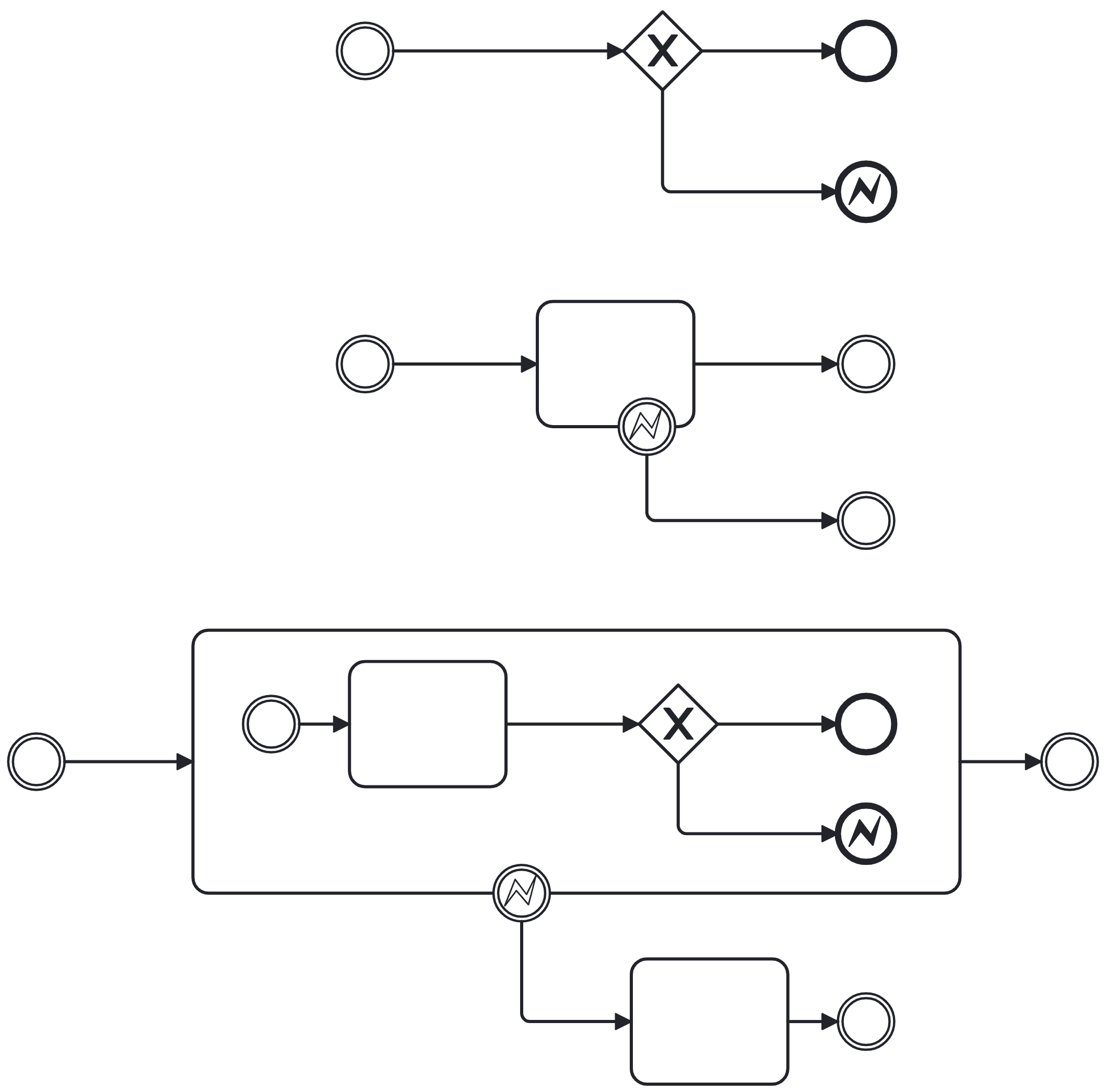
Handled as throw-catch with optional boundary events
-
Notational convenience for an exclusive gateway following the activity
Error Handling
-
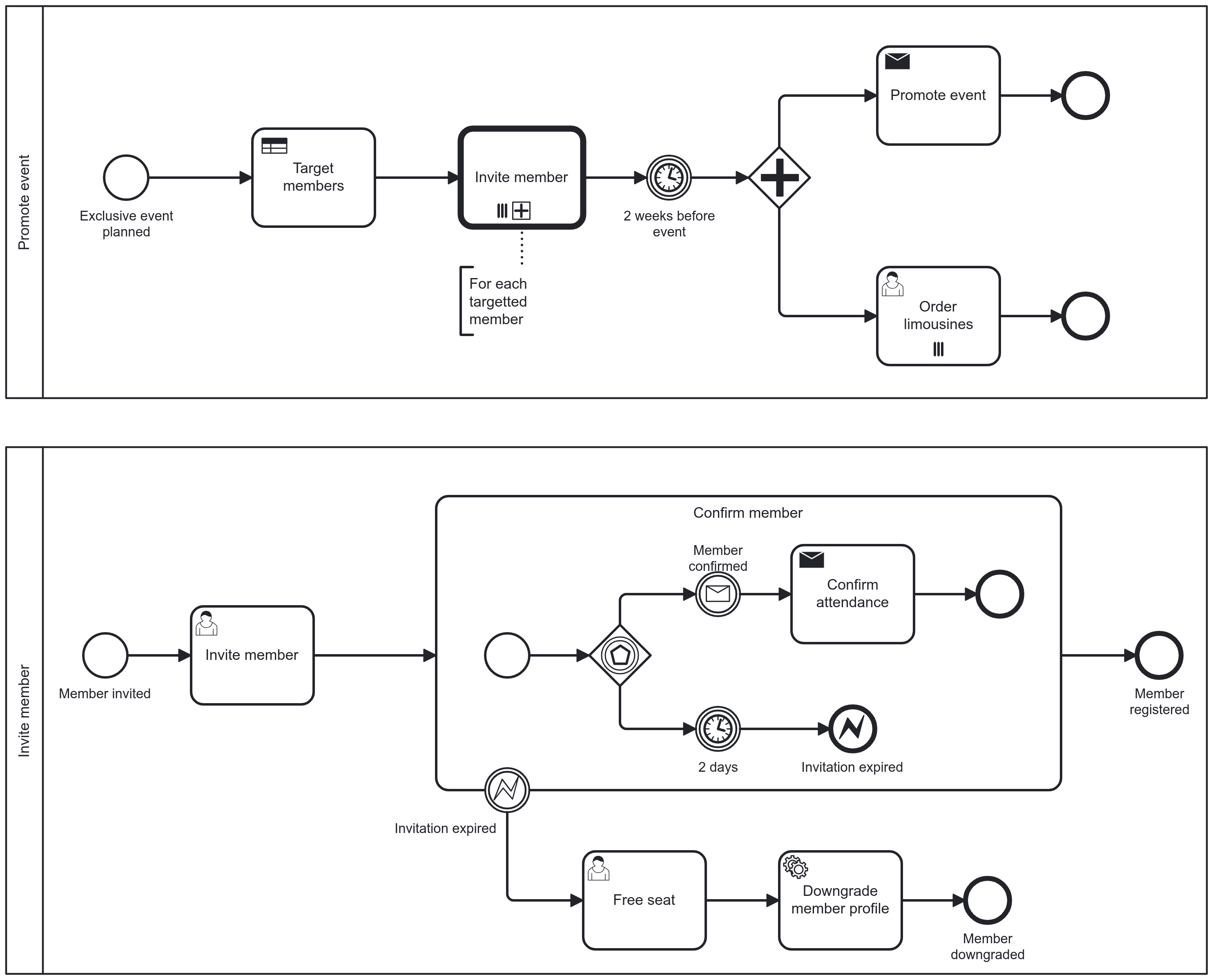
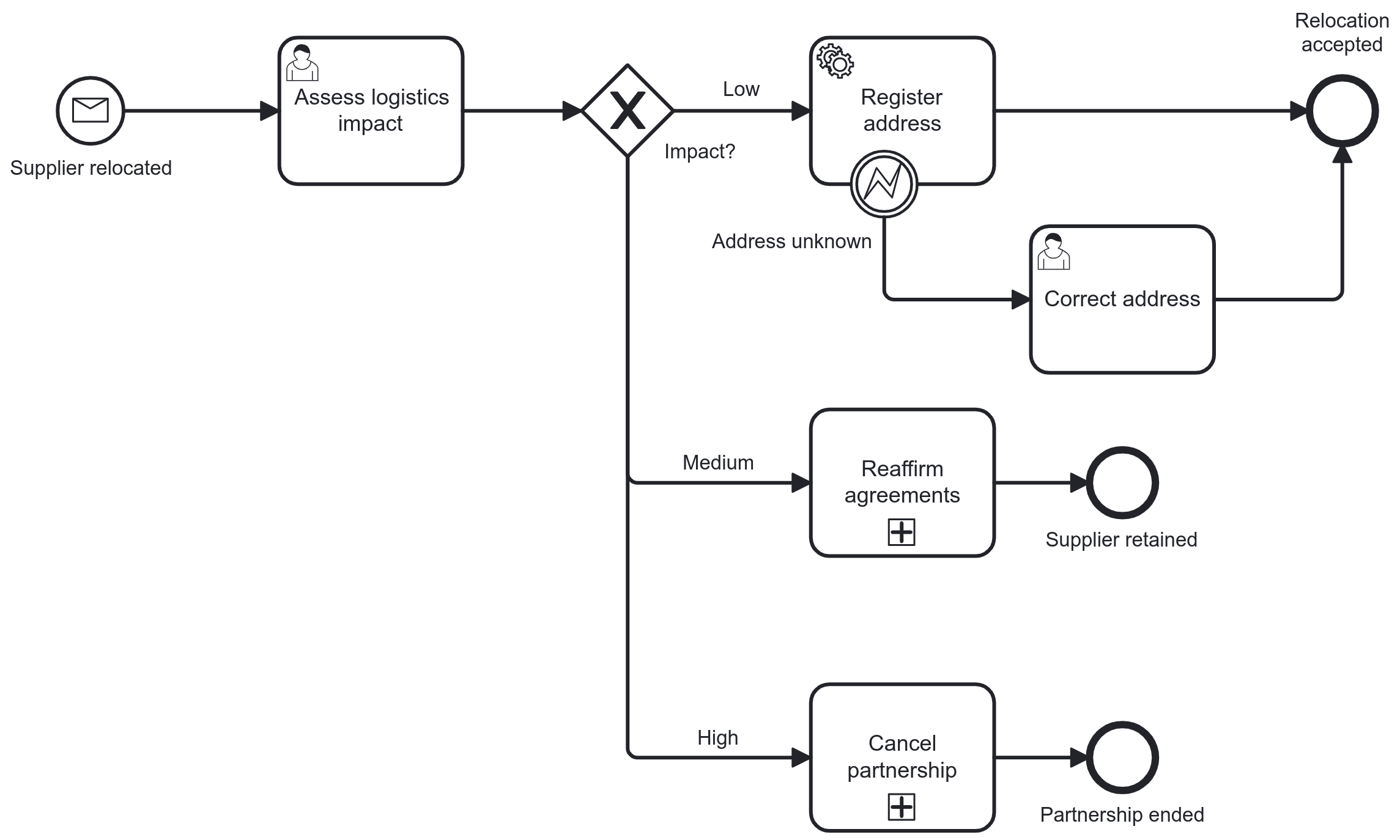
Error boundary event on a task: task did not complete normally, trigger is hidden
-
Error boundary event on a subprocess: subprocess did not complete normally, trigger is visible with expanded subprocess (i.e., contains an error end event)
-
Because an error boundary event is always interrupting, parallel paths within a subprocess are cancelled by triggering it from e.g. one of the paths
-
Multiple error boundary events are allowed, signifying different exception end states (referenced with error codes)
Transactions
-
ACID transactions vs. business transactions
-
ACID: short-running, technical transactions (with optional 2FC, XA, etc.)
-
Business: long-running transactions spanning multiple activities (all or nothing), often eventually consistent
-
-
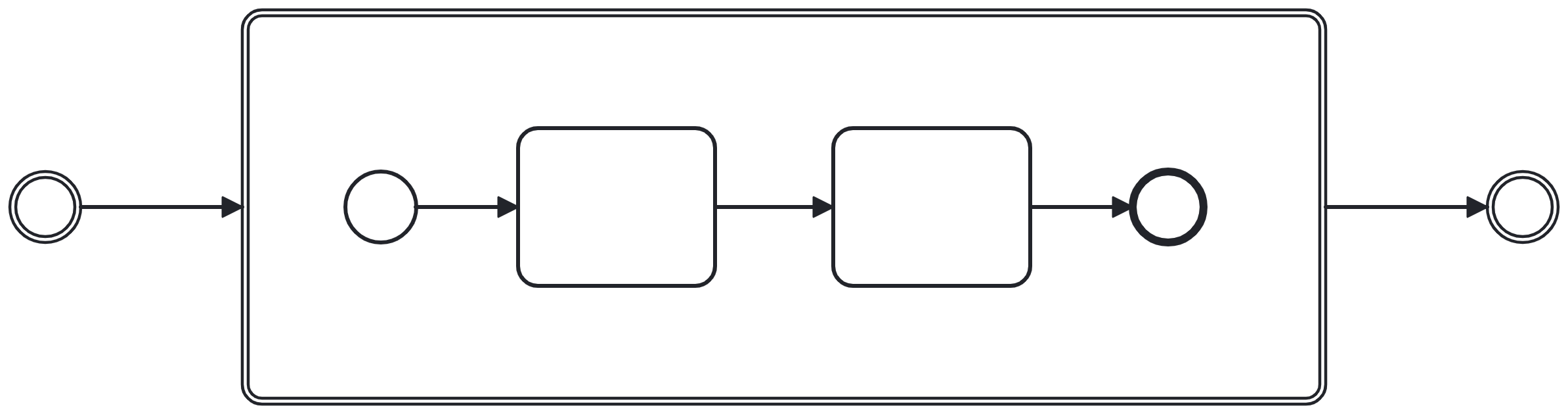
BPMN offers the transaction subprocess
-
Not Isolated: resources (people and systems) are not locked, because the transaction is long-running
-
Rollback is implemented by compensation [1]
Rolling Back Transactions with Compensations
-
Don’t undo the original action, but perform another action to bring the state back to the original
-
Only compensate the actions that were already successfully completed
-
Sometimes referred to as the saga pattern
Compensation with BPMN: Compensating Activities
-
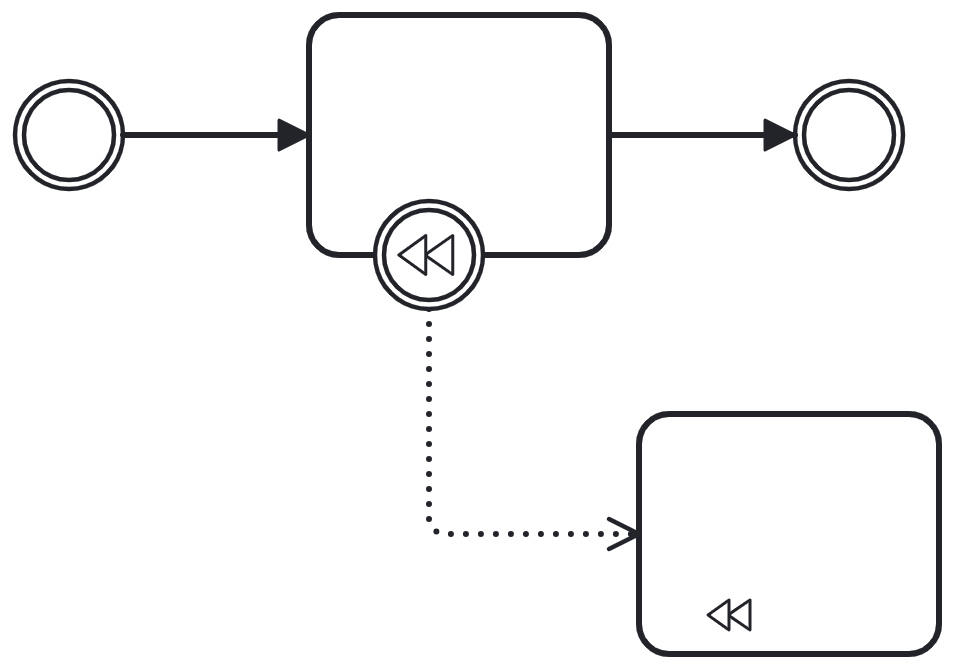
Connect compensating activities to activities with
-
Compensation boundary events and
-
Association links
-
-
Define the actions to perform for each activity to compensate for its side effects after successfully completing
-
Boundary event can not be triggered during the activity, only after
| Activities that were cancelled (i.e., not completed) are not compensated! |
Compensation with BPMN: Initiating Rollback
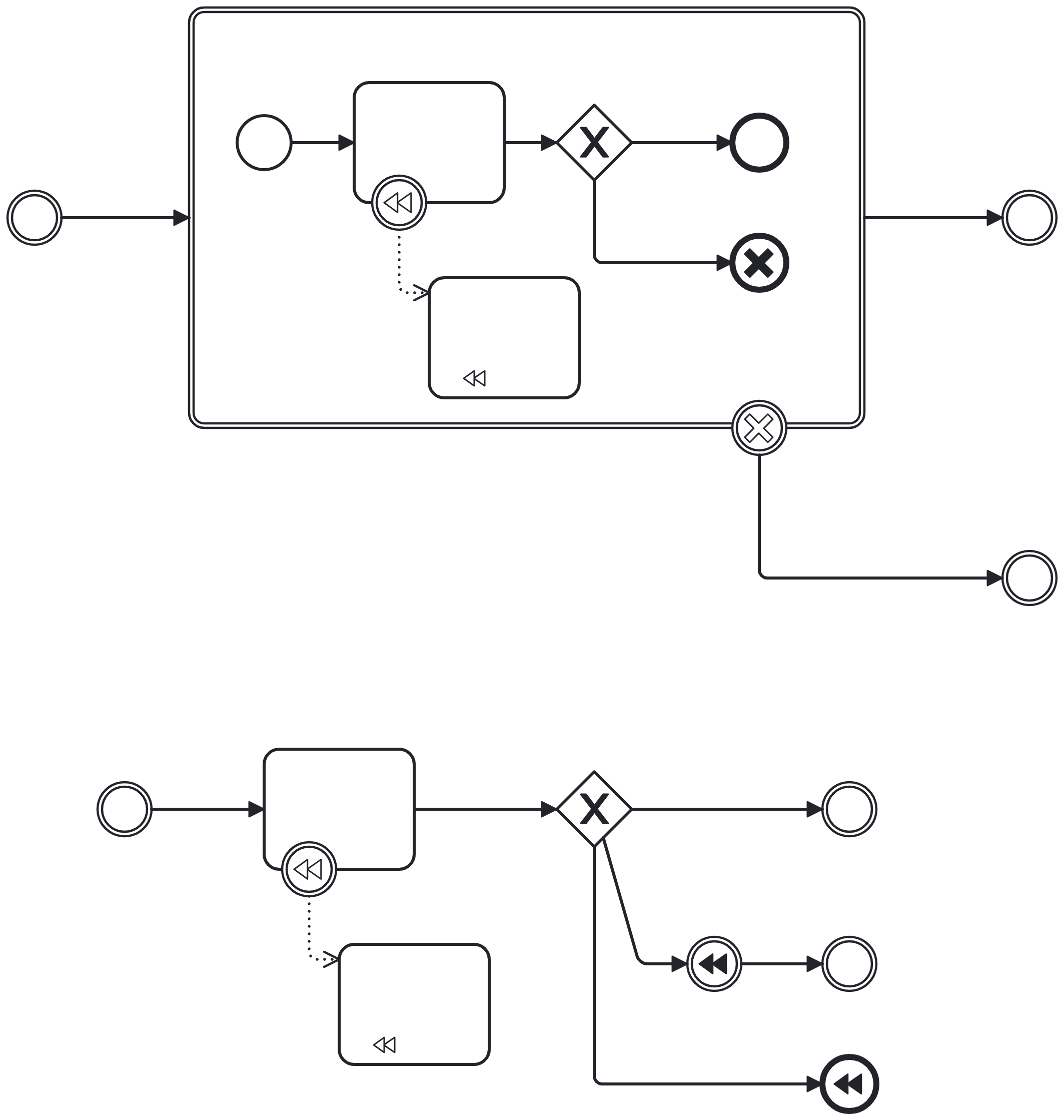
Initiate transaction failure and compensation with
-
Cancel end events inside a transaction subprocess
-
Catching the cancellation of the subprocess on the subprocess' boundary in a cancel boundary event
or
-
Compensation throwing events (intermediate or end) outside any transaction subprocess and
-
Invoking the compensation boundary events of completed activities
Compensation: Targets
-
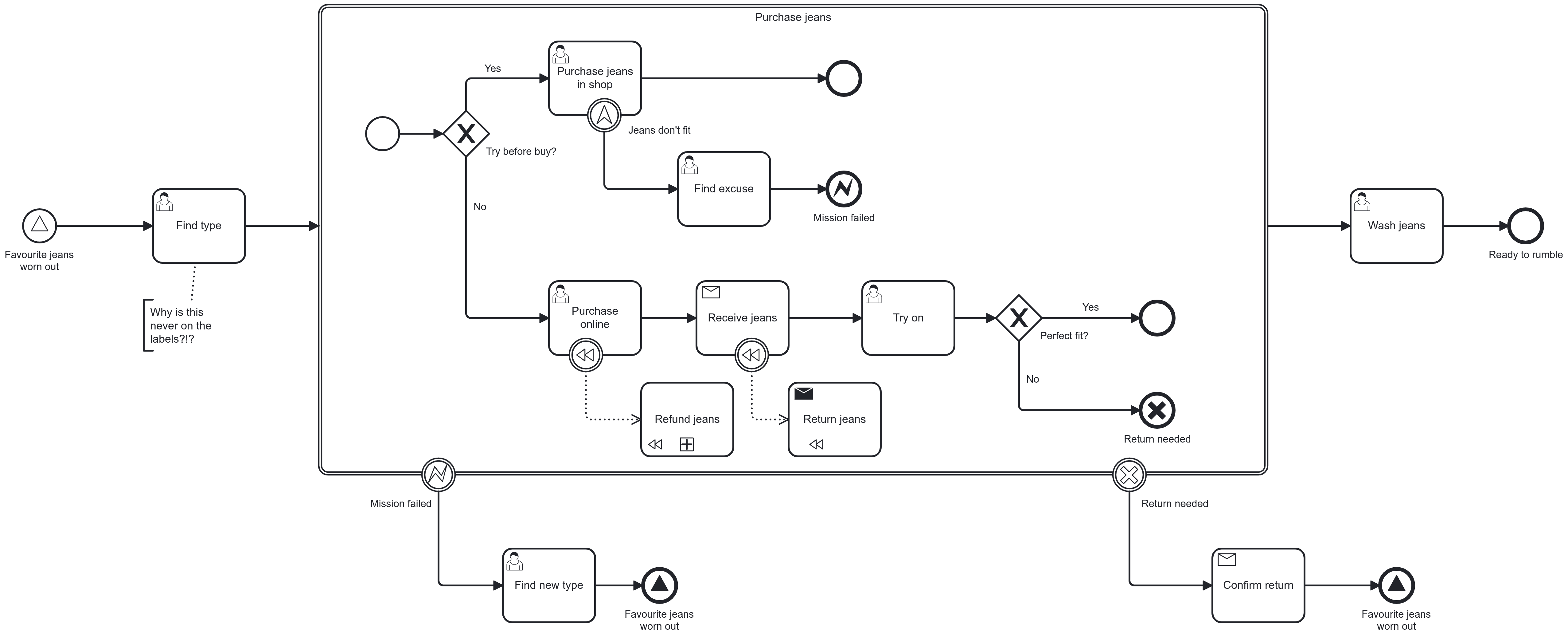
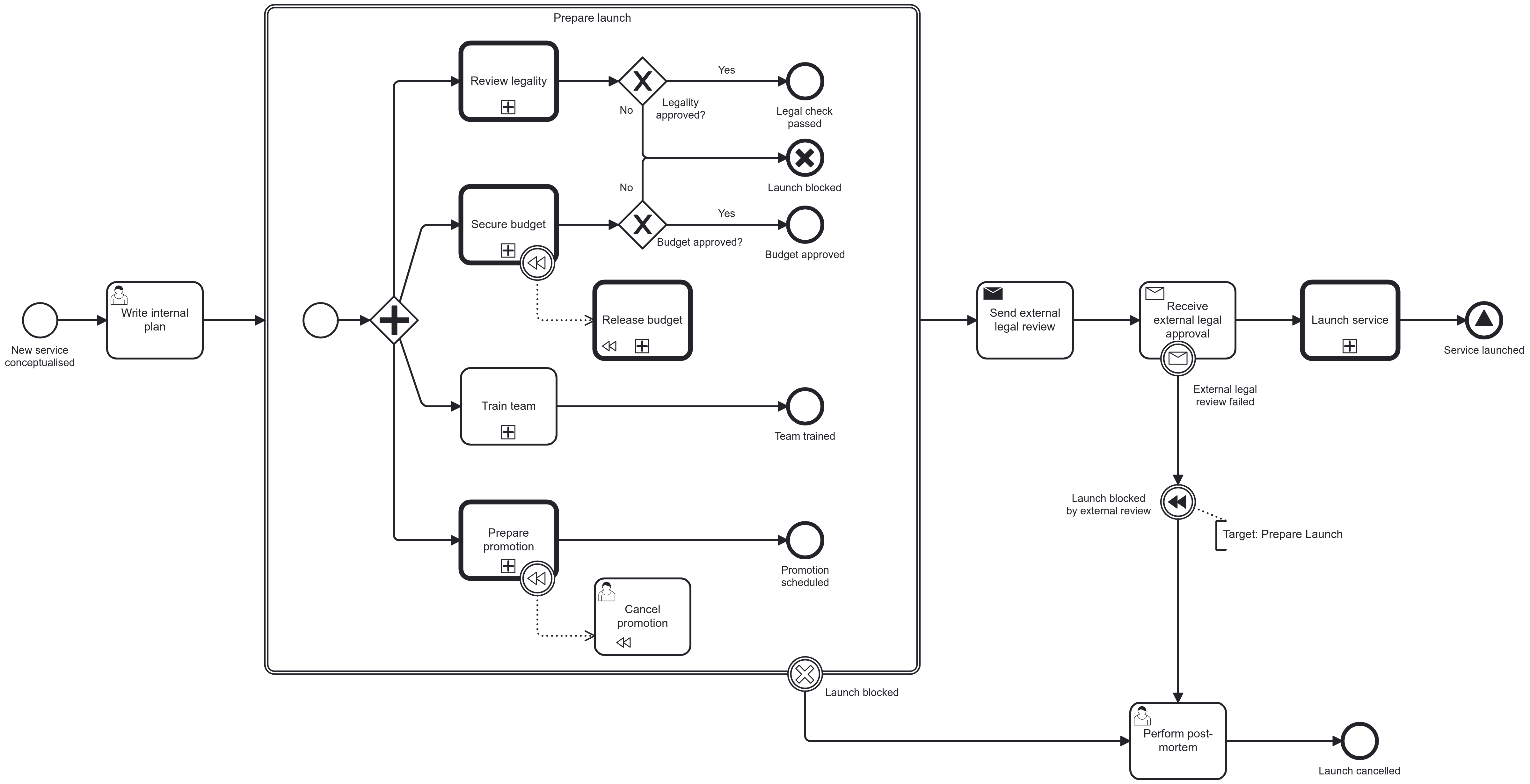
Cancellation with cancel events implies compensation
-
All compensating activities for completed activities inside the transaction subprocess
-
Other, interrupting boundary events do not perform compensation!
-
-
Compensation without cancel events requires configuration of the target activity to compensate
-
This may be a transactional subprocess as well → all compensations are executed
-
-
Compensating activities are executed for each completed instance of a multi-instance activity
Event Subprocess
-
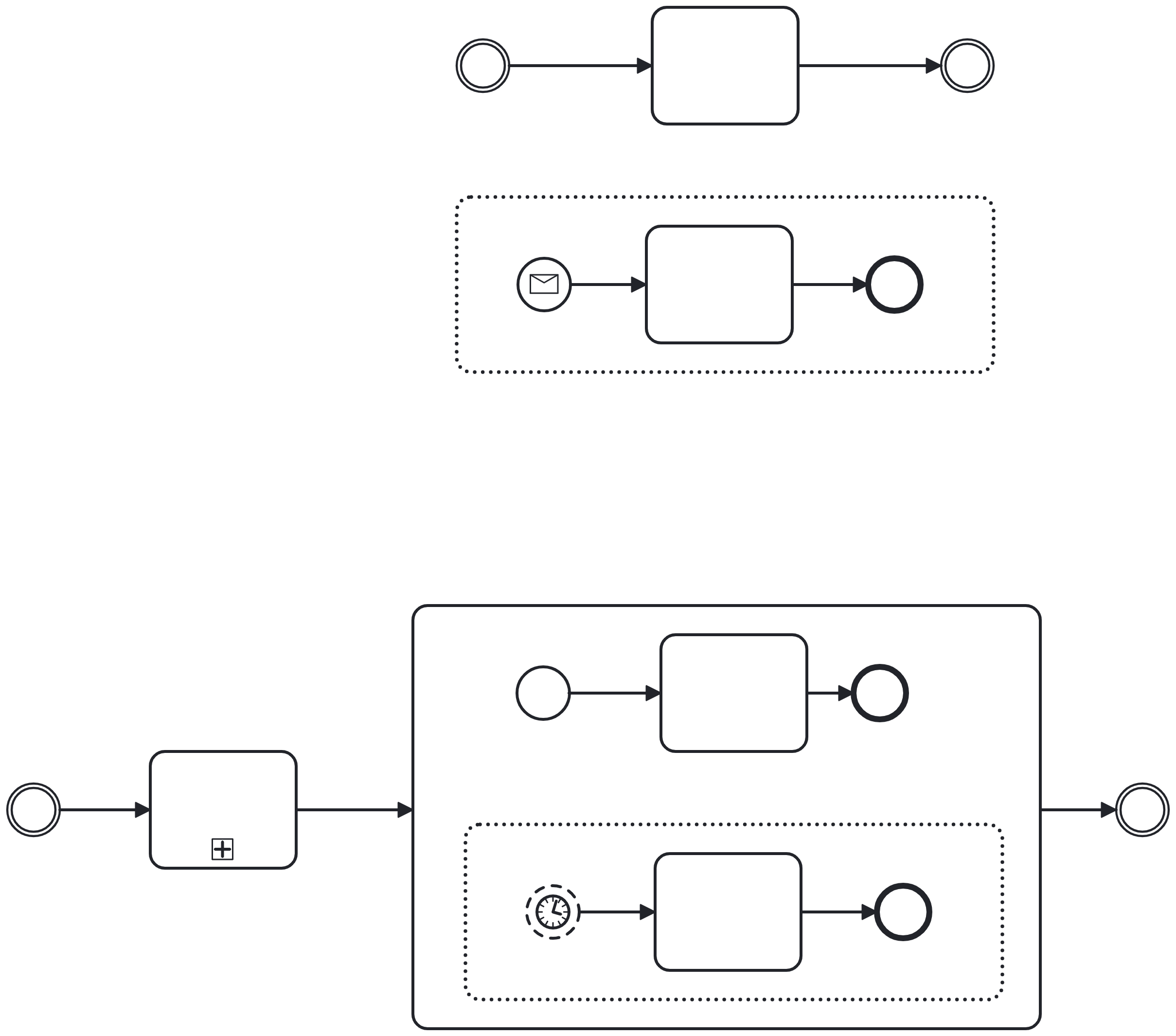
A subprocess that is conditionally triggered by the event of its (single) start event occurring during the scope that it is part of in the parent process
-
If the start event is interrupting (solid border), the entire scope is interrupted if it triggers (but may complete normally!)
-
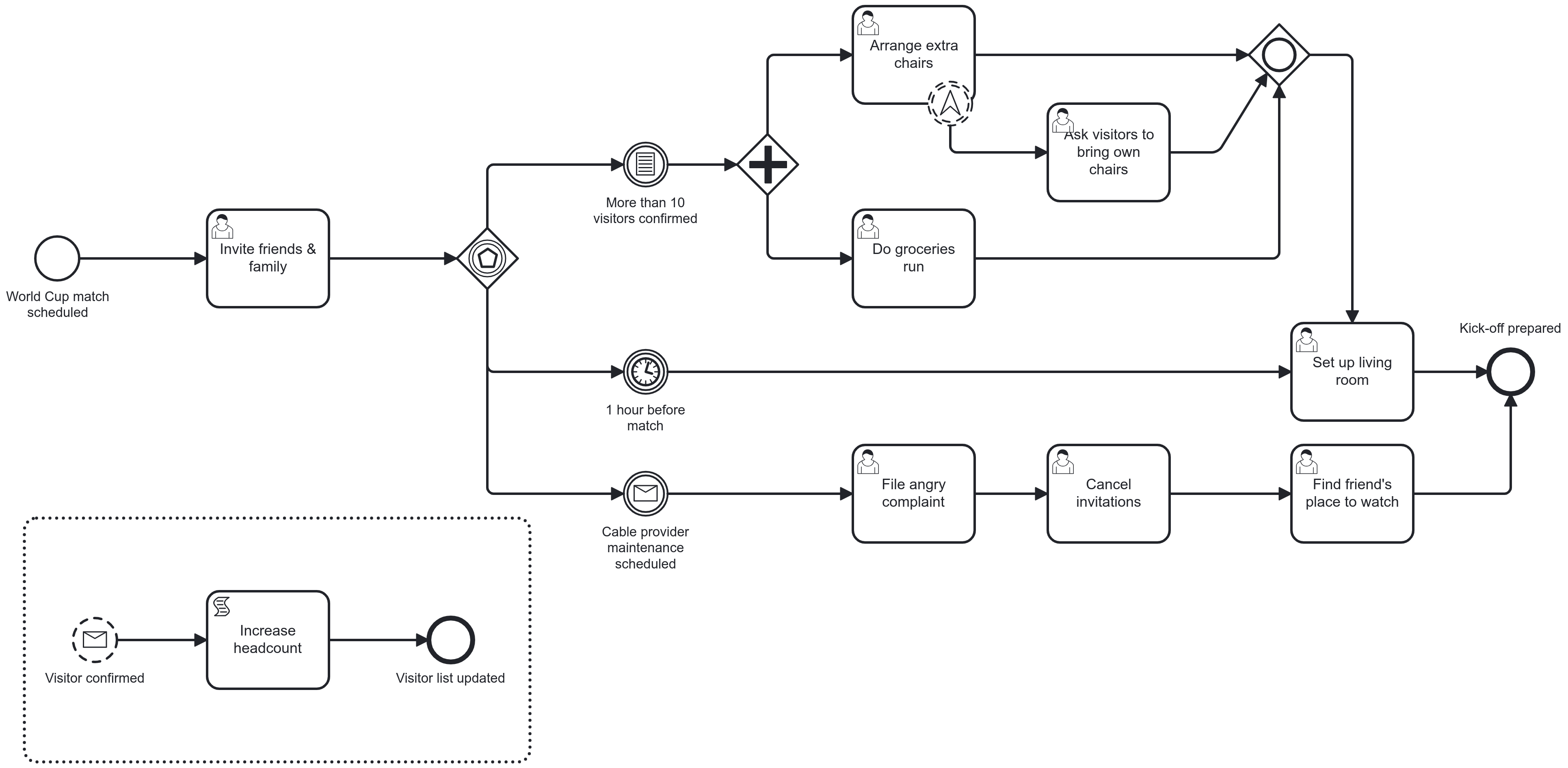
If the start event is non-interrupting (dashed border), the event subprocess is triggered in addition to the parent scope if the event triggers
-
The parent process can only complete when any triggered event subprocesses have completed as well
-
Not attached/connected to other elements with control flow (floating)
Event Subprocess
-
The event subprocess can only be triggered while its containing scope is active
-
Excellent fit for potential events during multiple activities: prevents repeated boundary events
-
Defines scope when certain events can be dealt with and when they can not yet or not anymore be handled
-
-
Has access to context of parent process
-
May be drawn collapsed or expanded (tool support varies)
-
Can throw error to boundary of containing process 🤘
Event Subprocess: Start Event Types
-
Can not be none start event
-
Message start event
-
Timer start event
-
Signal start event
-
Conditional start event
-
Escalation start event
-
Error start event
-
Compensation start event
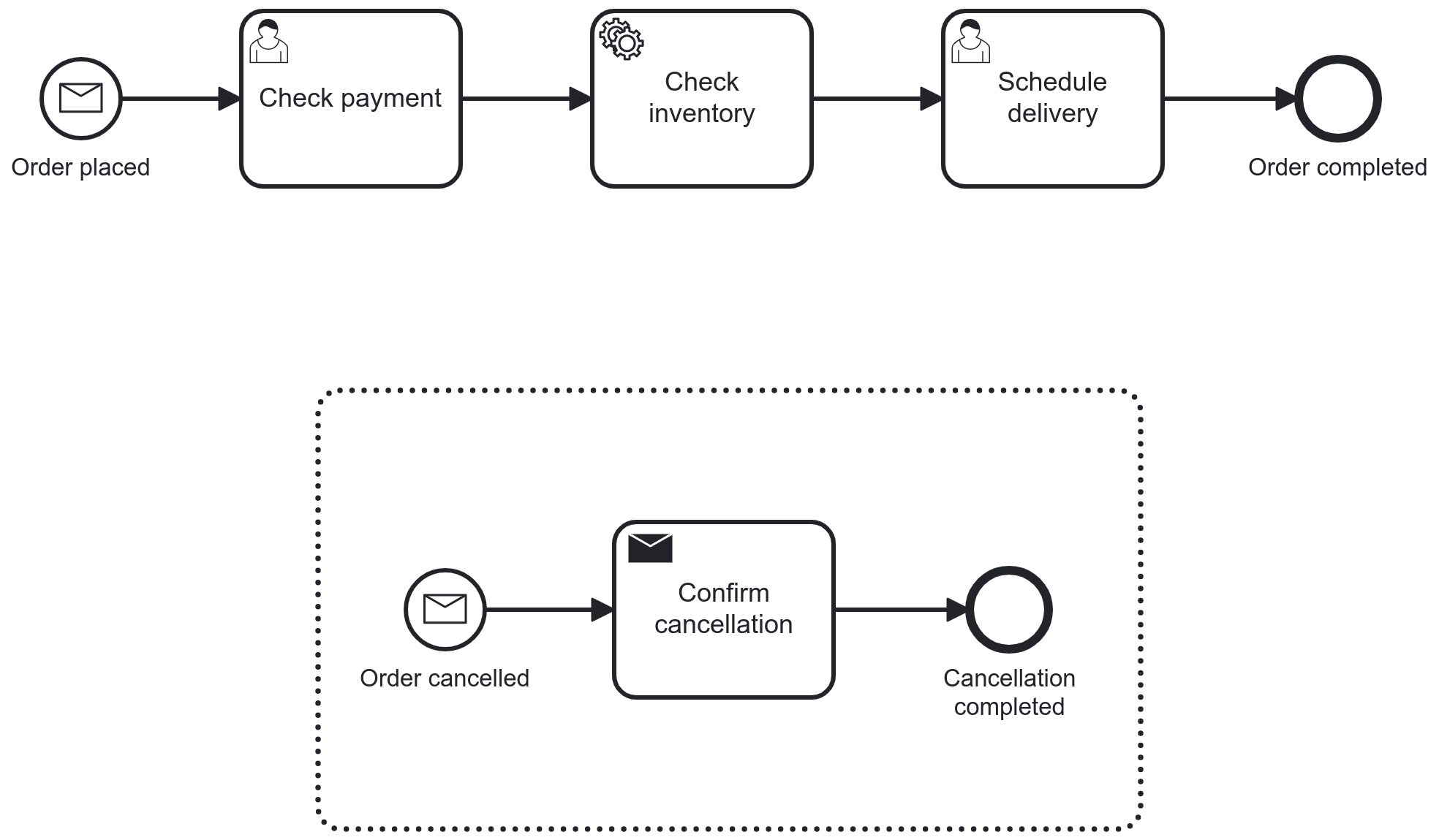
Event Subprocess with Compensation Start
-
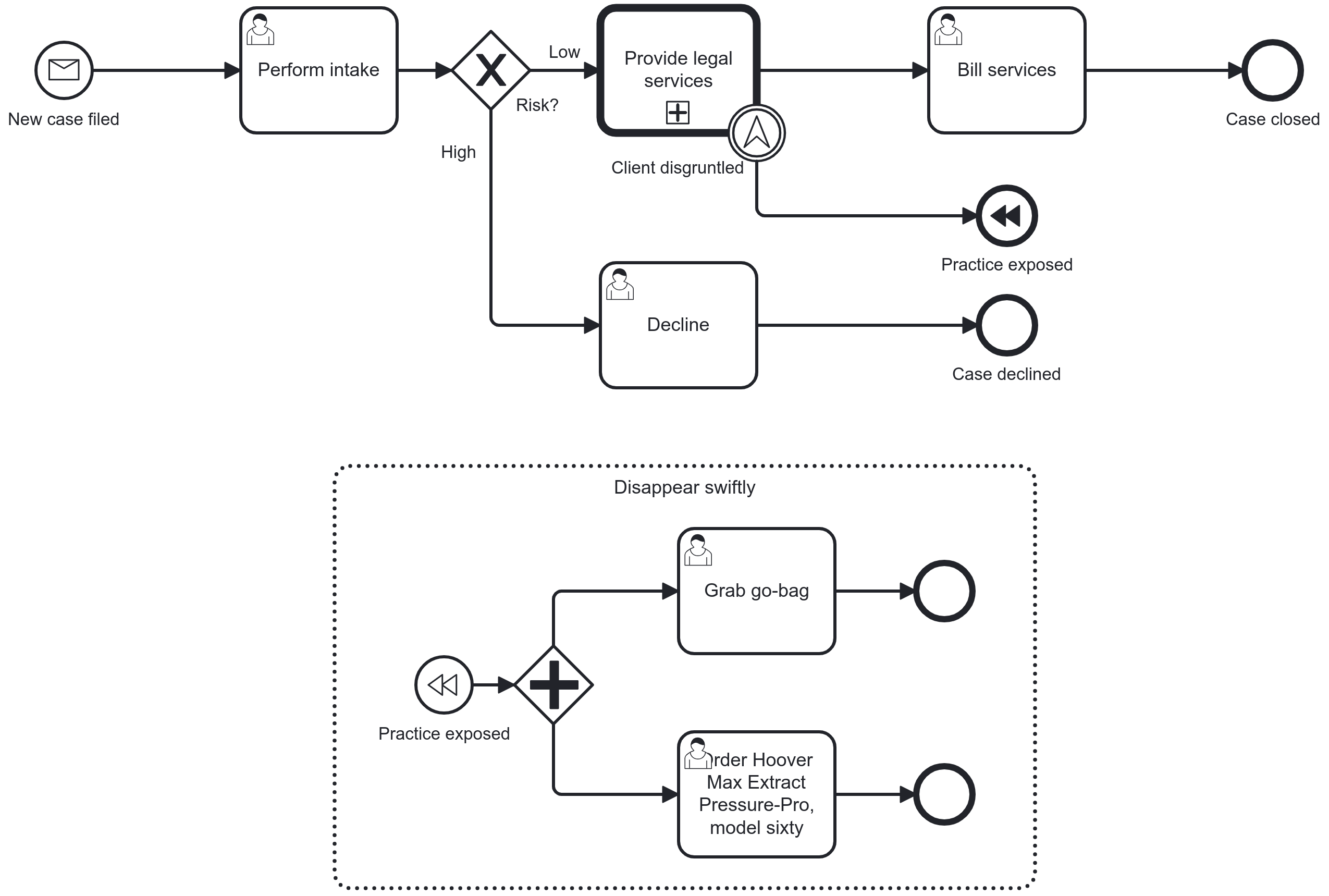
When compensation is triggered, an event subprocess can be triggered
-
Subprocess can perform multiple activities
-
Convenient when compensating activities don’t match up with original activities
-
Use compensation start event for event subprocess
Method & Style
-
With throw - catch: place boundary event close if possible
-
When using pairs and/or sets of throwing and catching events, use the same labels for visual linkage
-
Even more important when there are multiple sets in a model
-
Using Signals
-
Consider signal events only when message events, escalation events and error events don’t suffice
-
Messages communicate with other pools
-
Errors and escalations can only throw to the boundary of their parent
-
-
Use signal events when you need these characteristics:
-
Communication / synchronisation between parallel branches inside a process
-
Broadcast (publish/subscribe) between processes
-
Throw and continue normally (as opposed to error events and terminate events)
-
Errors
-
Be deliberate when applying errors: rely on default behaviour for other situations
-
Did the activity complete normally? Errors imply interruption
-
Consider error end event for a process, even if not catching
Transactions
-
Don’t apply transaction subprocesses everywhere
-
Most useful for coordinated and/or automated compensation
-
-
Consider process scope when applying compensation
-
Don’t expand the scope just to benefit from compensation features
-
The goal is not to capture entire life cycles in as few process models as possible
-
Event Subprocesses
-
Use event subprocess to prevent repeated boundary events
-
Use compensation start event for event subprocess if compensations are not 1:1 with activities