BPMN 2.0
Business Process Model and Notation 2.0
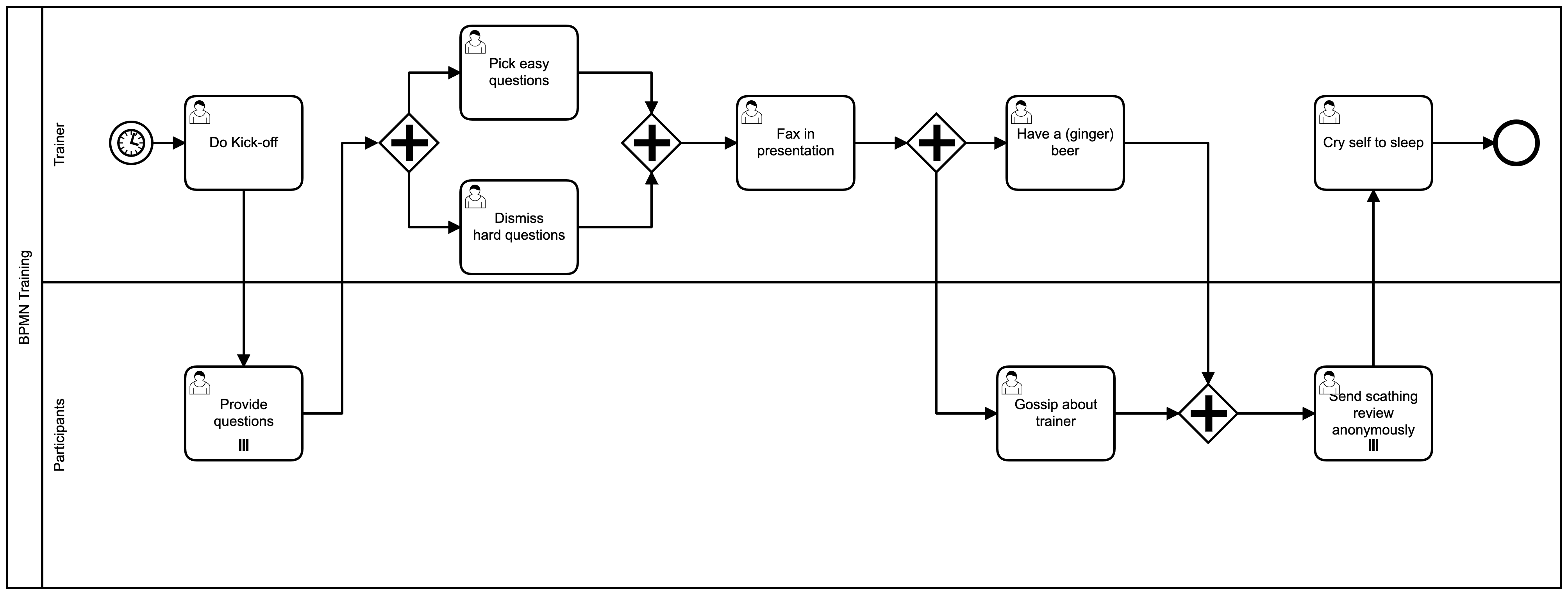
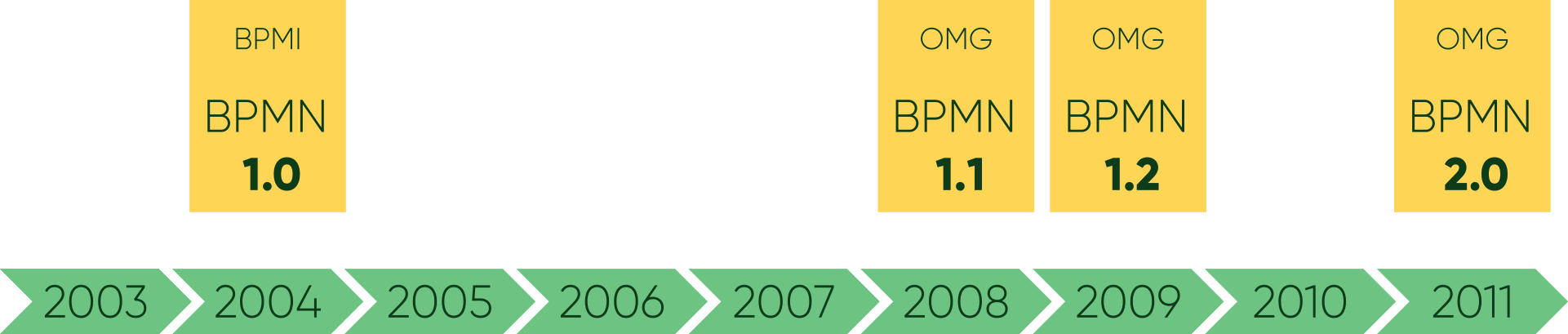
Business Process Model & Notation 2.0
-
Standard defined by Object Management Group (2011)
-
Covers:
-
Notation
-
Semantics
-
Executable model
-

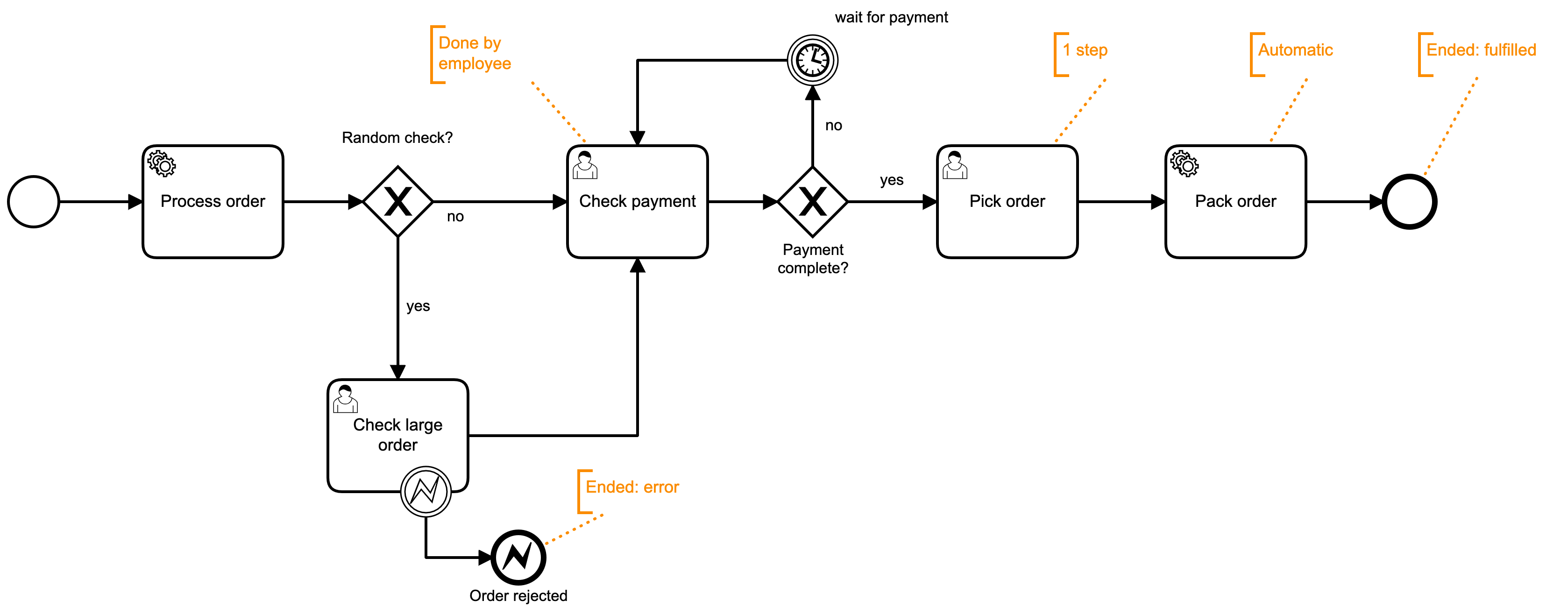
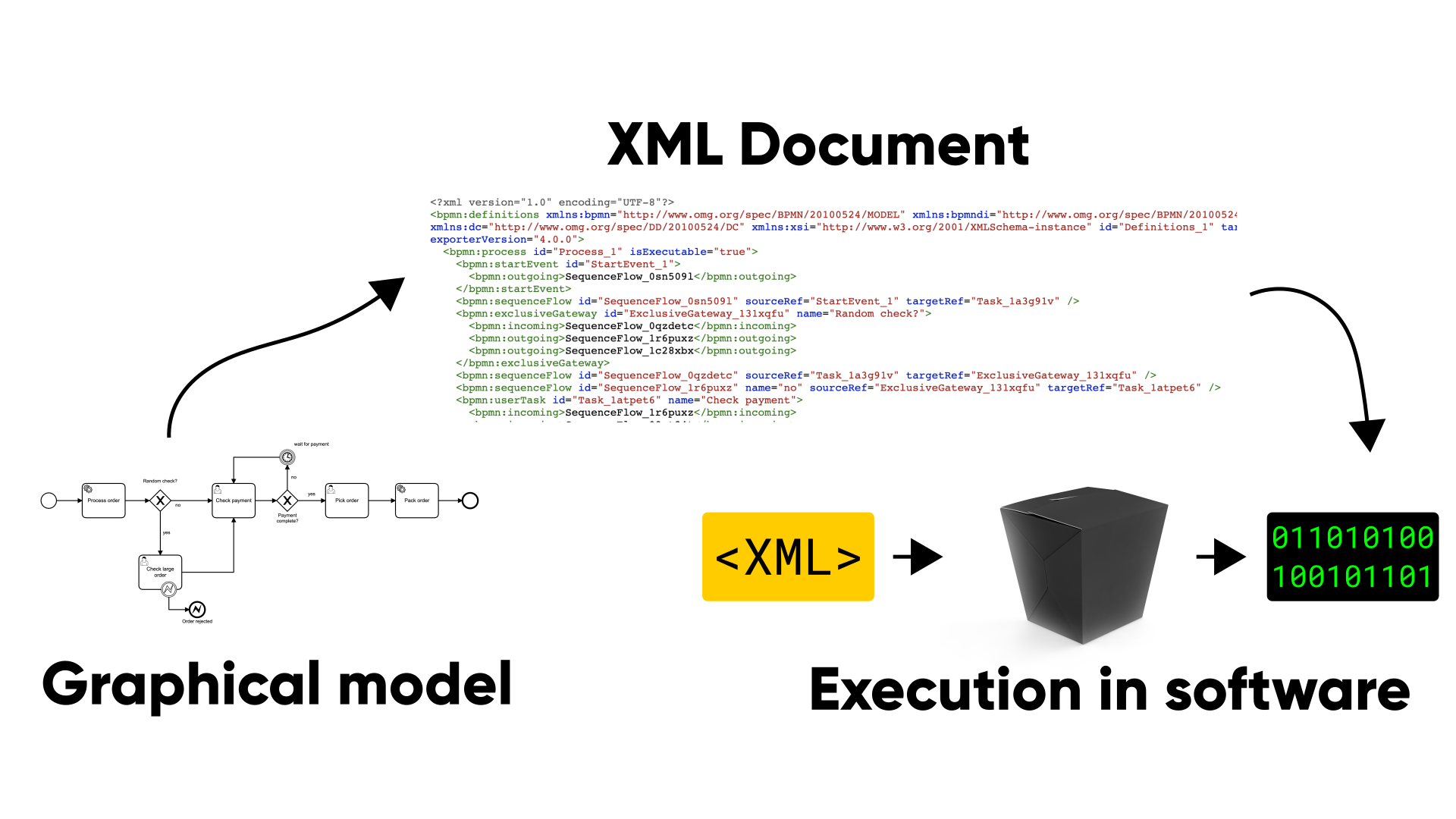
Talking About Processes
-
Designing a process takes time and discussion (the "hard" part)
-
Visualising is a great help
-
-
Semantics is equally important after initial exploration: reduce ambiguity
-
Drawing the diagram an configuring execution details
-
Easy if familiarised with notation
-
Not that time consuming at all
-
Hidden Assumptions
-
Describe the process vs. Control the process:
-
There is a process engine acting as the single conductor of the process
-
Process = orchestration: sequence of activities controlled by engine
-
Effective Process may be a choreography (e.g. microservices)
-
For BPMN, still an orchestration of the process 😜
-
-
Process Engine
-
A specialised software that understands process models
-
Executes processes that have been enriched with execution configuration in an automated fashion
-
Manages the process’ progression
-
Control - Informs people and systems when work needs to happen
-
Decide - Reacts to events, making decisions based on input
-
Track - Handles state management natively
-

Hidden Assumptions
-
All processes adhere to the model: automated control flow prescribes and executes process according to model
-
There is no state you didn’t model: transitions are instant
-
Data and human tasks are not part of the process execution
-
Triggering the start of the process instance is external to the model
Answers by BPMN Models
Answers provided:
-
When things happen
-
What order things happen in
-
Under what conditions things can happen
Answers not provided:
-
How, where or why things happen: intent is left to the reader
-
What exactly happens or who performs something (barely)
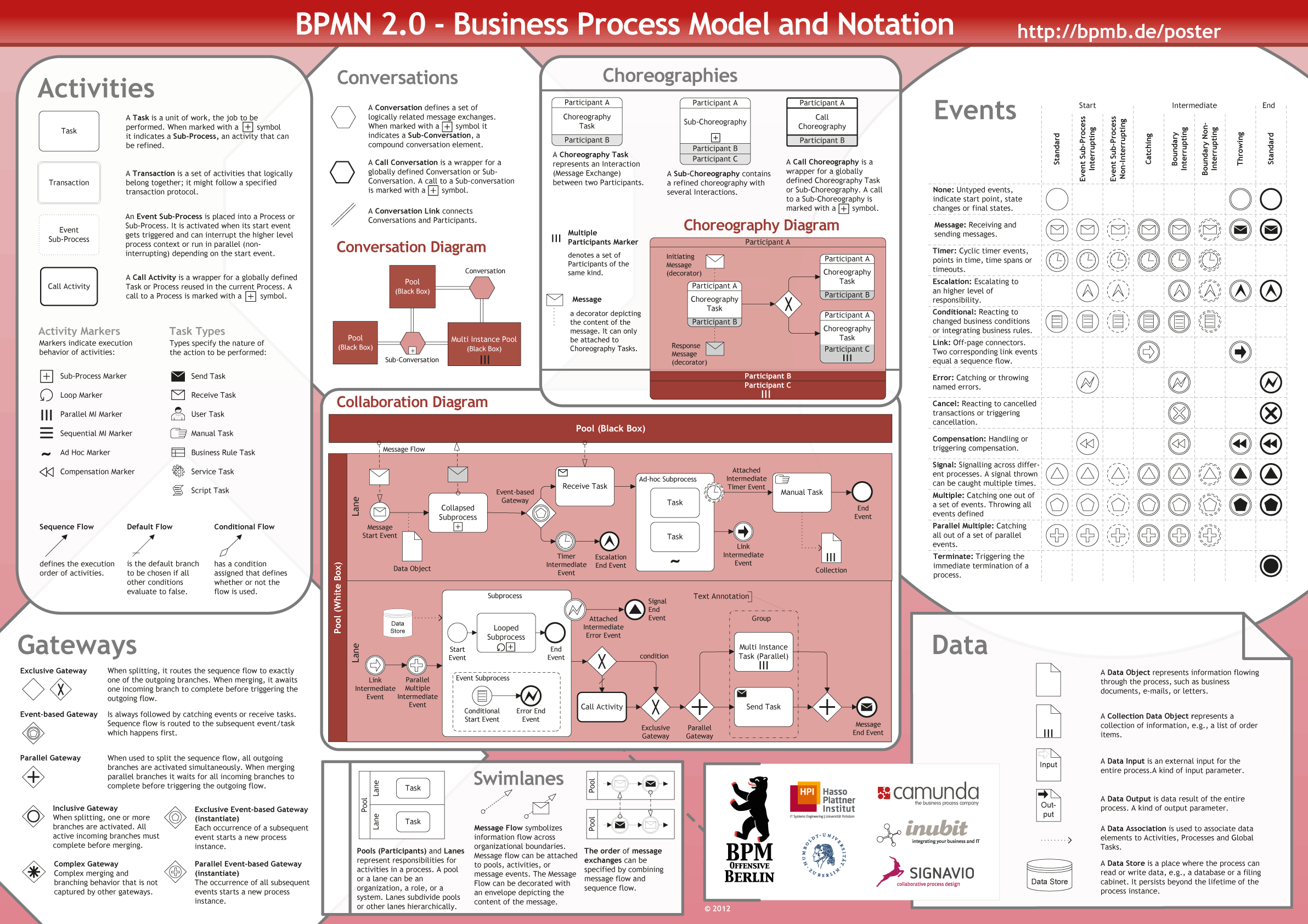
BPMN: Advantages
-
Standard - vendor and tool independent
-
Common and visual language with rich expressiveness
-
Executable models (optional)
-
Interchangeable, even graphically
-
End to End models capable of complex process patterns
BPMN: Disadvantages
-
The hodgepodge: extensive palette of constructs leads to confusion
-
Some configuration is invisible
-
The spec has no methodology: method and style needed
-
"There’s so much missing to model the business!"
Levelling Up
-
BPMN Method & Style
-
Bruce Silver
1st Edition
-
Cody-Cassidy Press, 2009
-
ISBN: 978-0982368107
2nd Edition
-
Cody-Cassidy Press, 2011
-
ISBN: 978-0982368114
Level 1: Descriptive BPMN
-
Basic set of constructs
-
Provides structure to the process
-
Start(s) and End(s)
-
Happy path steps
-
Alternative flows
-
Concurrent and conditional activities
-
-
Describes the intent of the process